
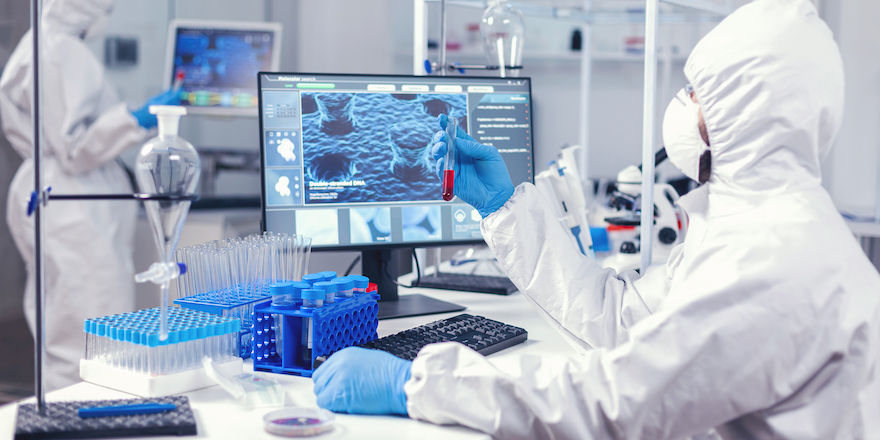
Ask what defines a laboratory and most answers name the analysers. The instrument on the bench is the visible part, and it is rarely the part that decides whether a result can be trusted. By the time a sample reaches an analyser, its integrity has already been settled by how it was transported, stored, spun and handled. Equipping medical labs well means treating the whole chain as the instrument, because a single weak link invalidates everything measured downstream of it.
Cold Chain From Collection Onward
Sample degradation begins at collection, not at reception. Transport boxes with validated temperature performance, calibrated fridges for routine specimens, and freezers at minus twenty or minus eighty for longer storage each cover a different part of the chain. What matters as much as the hardware is continuous monitoring with alarms that reach somebody outside working hours. A freezer that fails on a Friday evening and is discovered on Monday has destroyed far more value than the unit itself is worth.
Preparation Before Analysis
Most of the handling work happens before any measurement. Centrifuges separate serum and plasma, and rotor selection and balance discipline determine whether that separation is clean or haemolysed. Vortex mixers, dry baths, heat blocks and water baths condition samples to defined temperatures. Pipettes, manual and electronic, carry the largest hidden error in the whole workflow, which is why their calibration schedule deserves the same seriousness given to the analysers they feed.
Analysers and Throughput
Choosing analytical platforms is a question of volume and mix rather than raw capability. A clinical chemistry and immunoassay line sized for peak morning workload behaves differently from one sized for daily average. Haematology, coagulation and microbiology each bring their own reagent logistics. Molecular platforms add extraction and amplification steps with strict separation requirements. The realistic question is what happens when the busiest instrument is down for a day, and whether the workflow has anywhere to go.
Containment and Operator Safety
Handling potentially infectious material sets the specification for the room as much as for the equipment. Class II biological safety cabinets protect operator, sample and environment when they are correctly sited away from doors and airflow disturbance, and certified after every relocation. Fume cupboards handle chemical rather than biological hazard and are not interchangeable with cabinets. Eyewash stations, spill kits and appropriate waste containment complete an arrangement that only works if it is tested rather than assumed.
Where Equipment and Consumables Come From
Procurement decisions shape uptime more than most laboratory managers expect. Reagents, controls, calibrators and consumables have to arrive reliably and within date, and a shortage of one control material can halt a whole assay. The supplier laboratory equipment is bought through should hold local stock, provide installation and training, and support the instrument for its full working life rather than the warranty period alone. A cheap instrument with a distant service base is an expensive instrument.
Sterilisation and Waste
Autoclaves sit at both ends of the workflow, preparing clean glassware and media on one side and rendering infectious waste safe on the other. Chamber size, cycle time and the ability to validate each run all matter, and load records should be retained. Hot air ovens serve materials that steam would damage. Segregated sharps and biohazard streams, sealed and collected by licensed handlers, close the loop and are examined closely during any inspection.
Water Purity as a Hidden Variable
Laboratory water is a reagent, and its grade is frequently the unexamined cause of drifting results. Type III water suffices for glassware rinsing, Type II for general reagent preparation and buffers, Type I for molecular work, cell culture and trace analysis. Purification systems need cartridge changes and sanitisation on schedule, with resistivity and total organic carbon monitored continuously. Storing purified water badly undoes the purification, since bacterial growth in a neglected reservoir contaminates everything drawn from it.
Calibration, Traceability and Accreditation
Accredited testing rests on documentation as much as on technique. Balances, pipettes, thermometers, centrifuges and temperature-controlled storage all require scheduled calibration traceable to national standards, with certificates retained and deviations investigated. Internal quality control runs alongside external proficiency testing to demonstrate that performance holds over time. Choosing equipment that produces exportable, auditable records rather than a printed slip makes the entire compliance burden lighter every subsequent year.
The Utilities Behind the Bench
Laboratory services are easy to overlook until they fail. Stable power with backup for cold storage, adequate ventilation, purified gases for chromatography and, in many facilities, clean compressed air for pneumatic instrument functions and sample handling. Where an air compressor Singapore facilities rely on feeds analytical equipment, oil-free delivery and proper drying are not optional extras, because contaminated air reaches the sample path directly and produces failures that are very difficult to trace.
Building the List in the Right Order
Start from the test menu and the expected daily volume, then work backwards through preparation, storage and utilities before selecting analysers. Budget for calibration, service contracts and consumables across the equipment life rather than for the purchase alone. Leave room for redundancy on anything whose failure stops reporting. A laboratory built in that sequence tends to turn around results faster than one built around whichever instrument was specified first.

